Industrial drone with obstacle sensing at an overhead line Four-legged robot moving across open terrain Industrial drone flying over a solar farm in the mountains Two legged robots and a drone operating on sandy terrain

Legged robots, docked drones and sensors for your task

The robot takes the sensors to where they are needed, and the sensors determine what data you get. We put both together to suit your task.

Four types at a glance

The task and the terrain decide whether a system flies, drives or walks. We use these four types, individually or in combination.

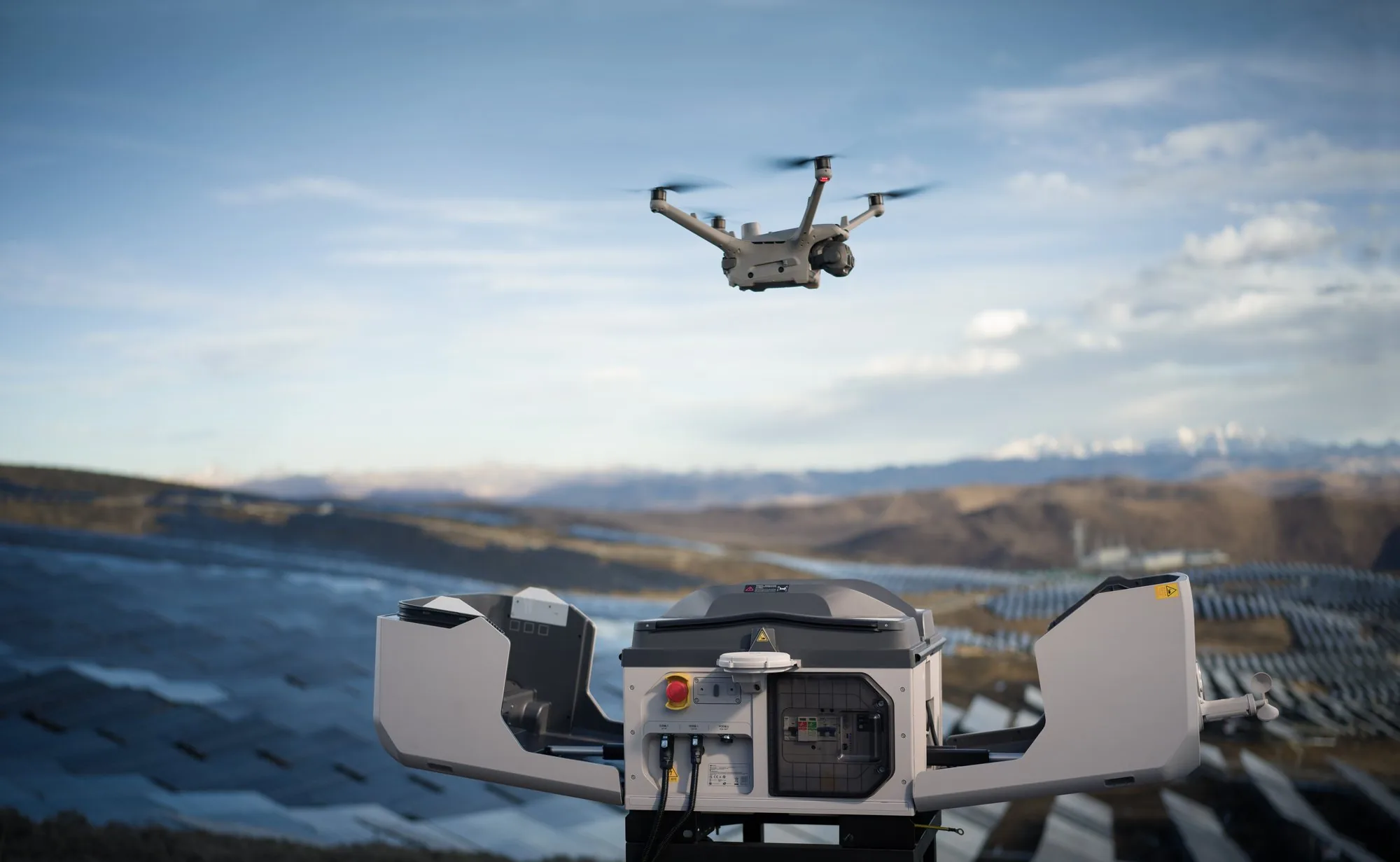
Drone launching from an open dock over a solar farm

Drone with dock

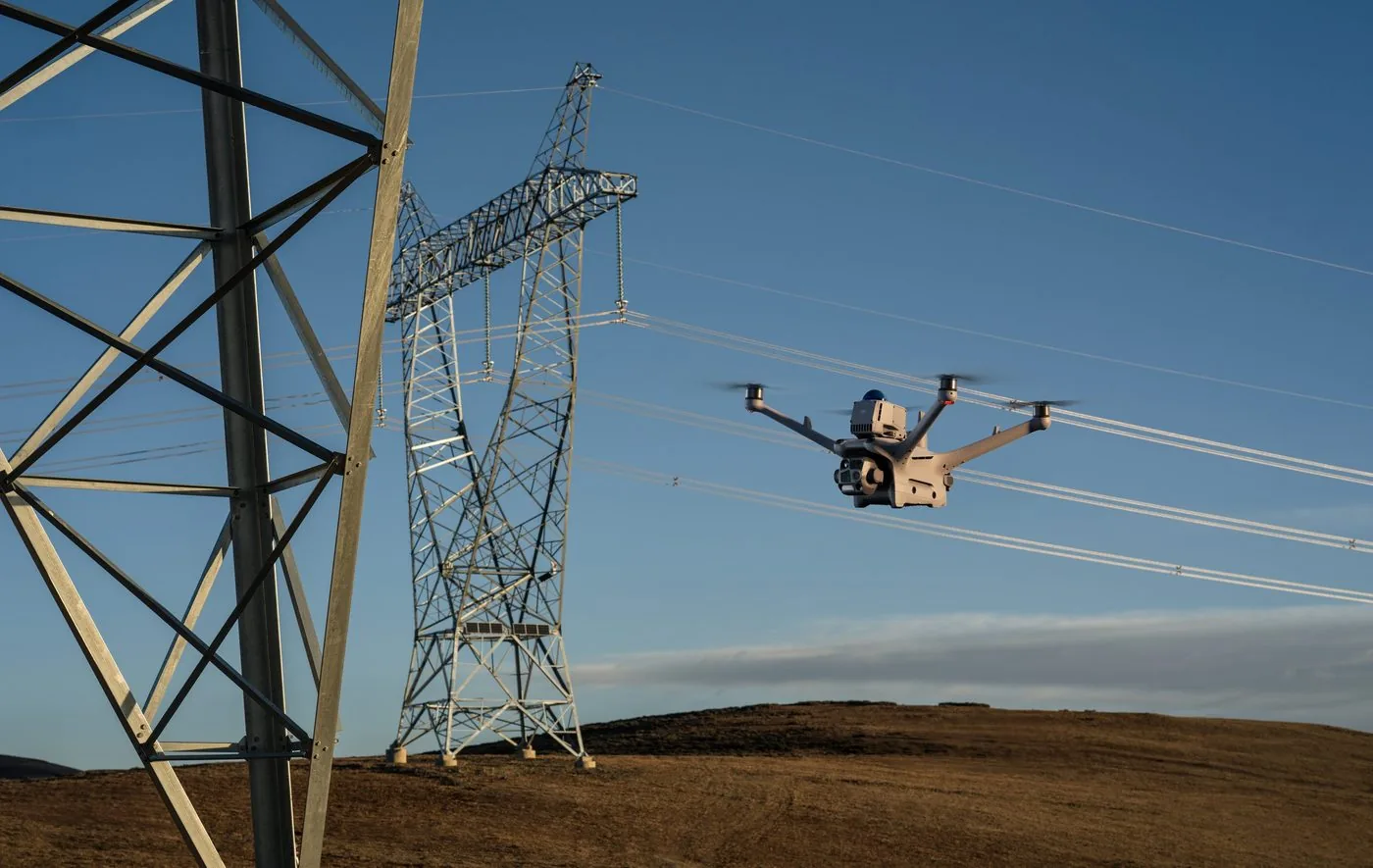
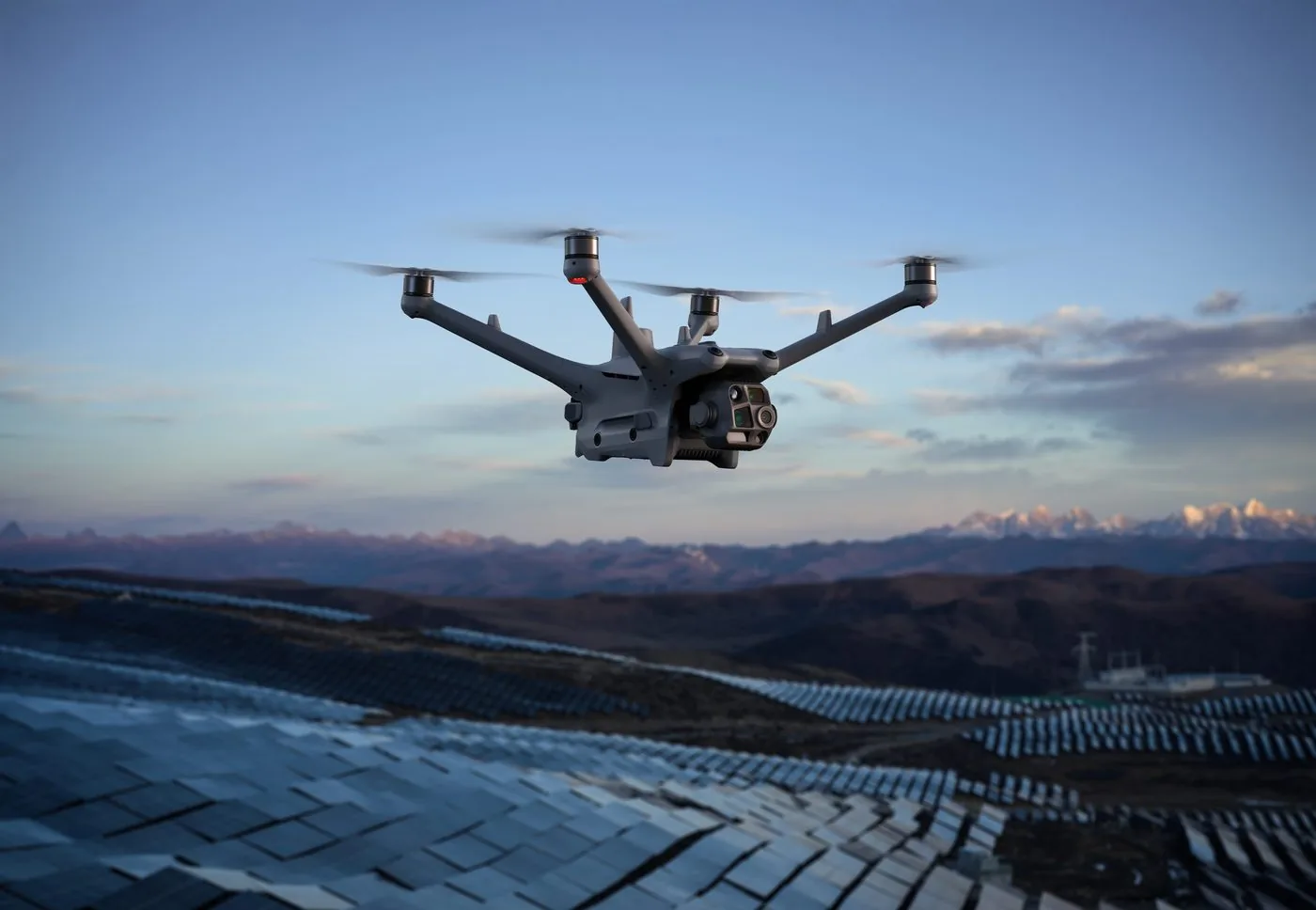
The dock launches, charges and protects the drone at its location. With the DJI Dock 3 and the Matrice 4D or Matrice 4TD drones, flight operations run remotely. The dock can be permanently installed or mounted on a vehicle, so it can change location as the task requires. This mode of operation is also known as drone in a box. As the holder of an LUC, Solectric GmbH knows the authorisation process for automated flights first-hand.

What it can do

  • Missions on a schedule or automatically when an alarm is raised
  • Take-off, landing and charging with no pilot on site
  • Zoom, thermal imaging and 3D mapping, depending on the drone
  • Live feed straight to the control room
Benefit
Recurring missions with no pilot on site, which makes 24/7 operation possible.
Deployment
Permanently installed or mobile on a vehicle, depending on the location.
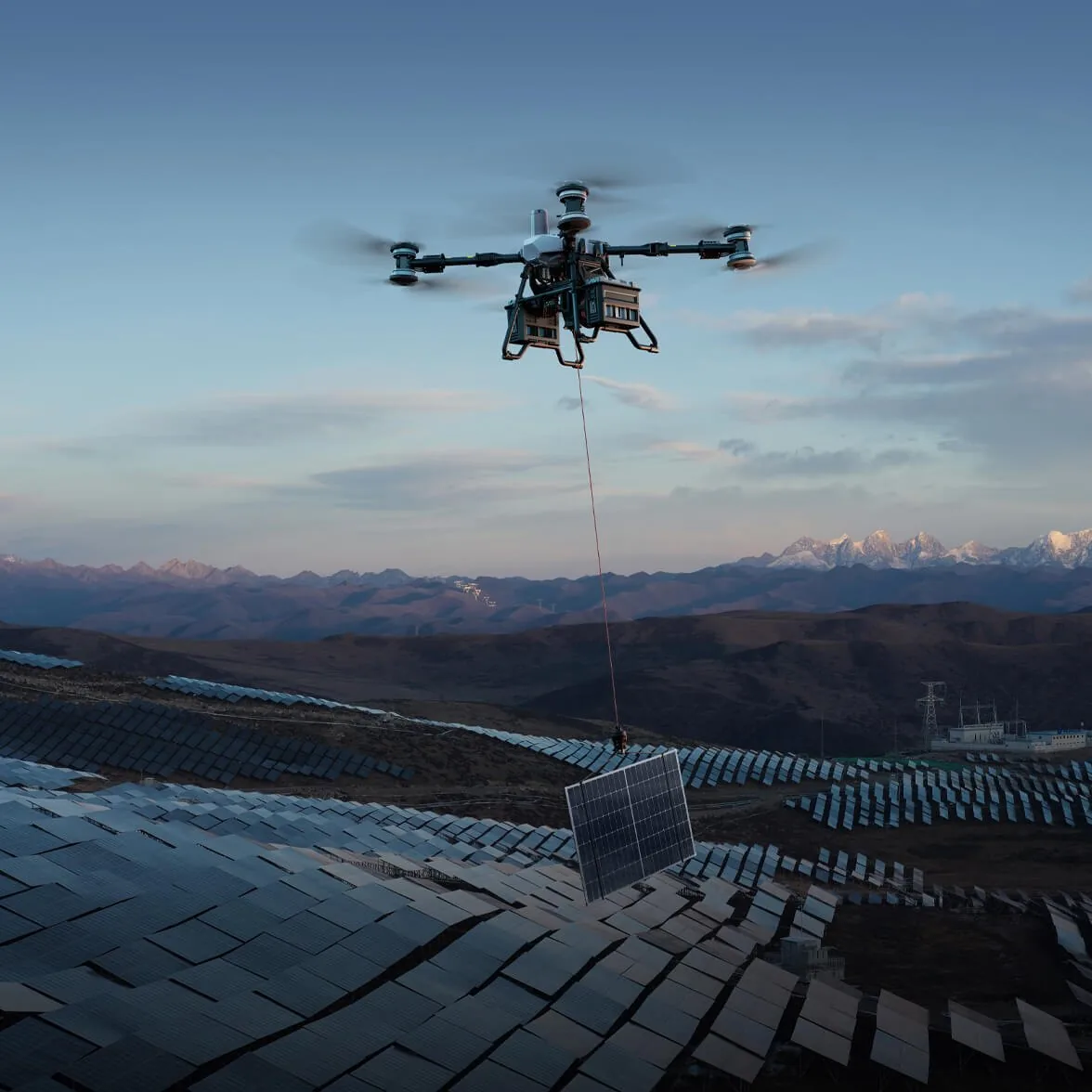
Cargo drone lowering a solar module on its winch over a solar farm

Cargo drone

Cargo drones carry loads over several kilometres into hard-to-reach terrain, with a payload of up to 100 kilograms. At the destination, the drone either lands or lowers the load on a line while it stays in the air. That way the load arrives even where there is no room to land.

What it can do

  • Loads of up to 100 kilograms
  • Landing and unloading at the destination
  • Lowering the load on a line without landing
  • Flights over water, slopes and rough terrain
Benefit
Deliveries remain possible in difficult conditions, for example when there are no roads or roads are closed.
Deployment
Transporting material to construction sites, pylons and mountain stations, and delivering supplies across water and in rescue operations.
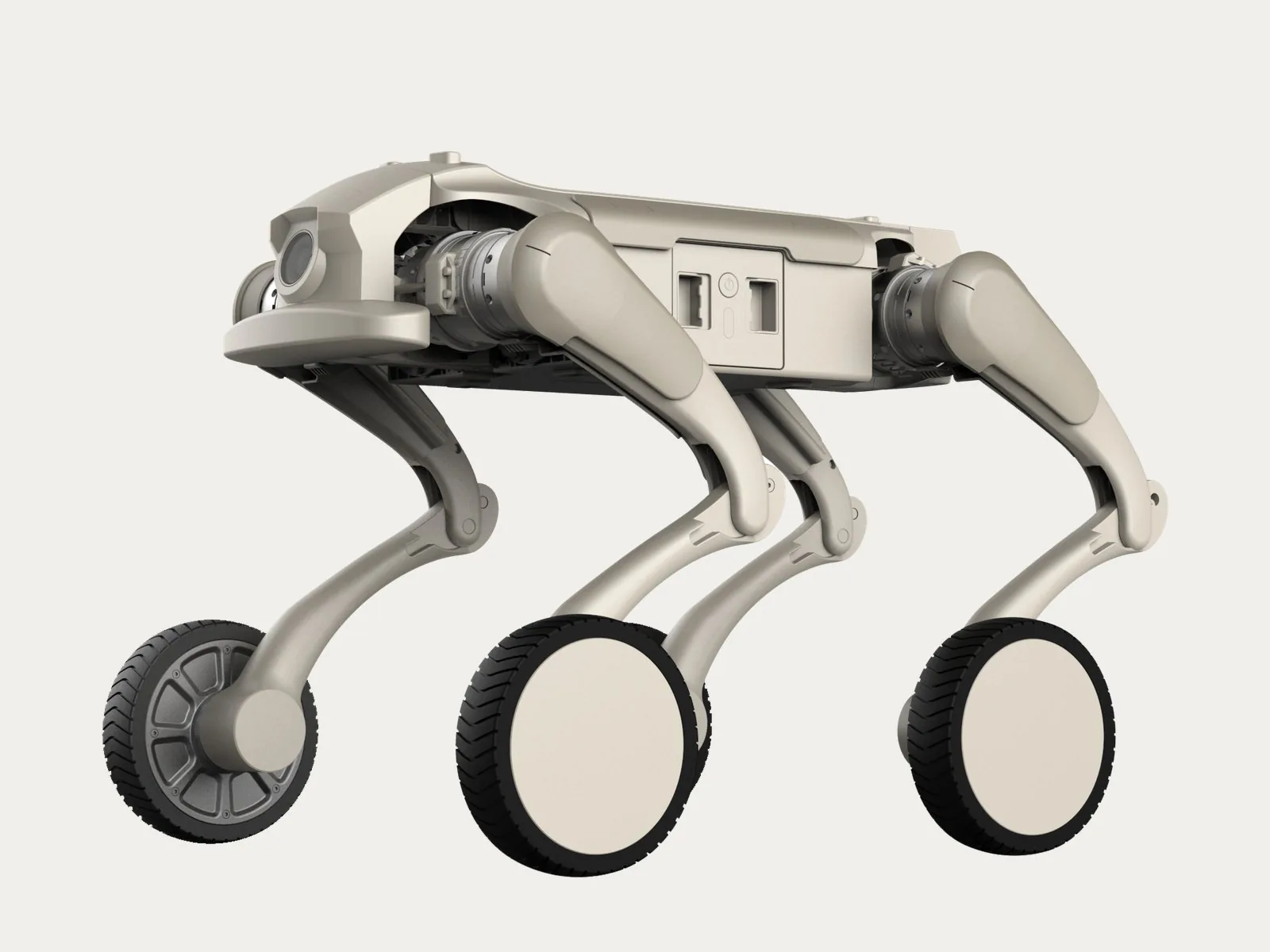
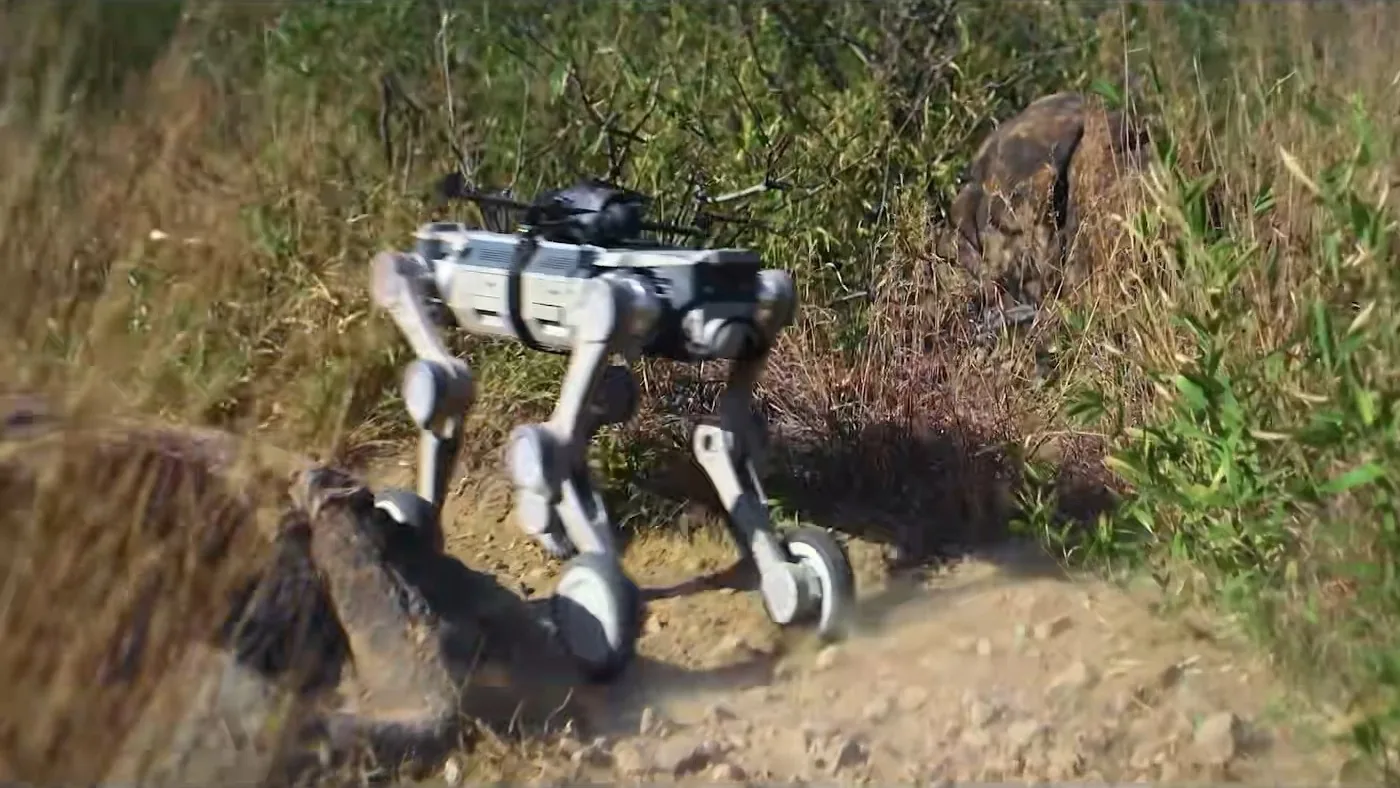
Four-legged robot with wheels at the ends of its legs, product view

Wheeled legged robot

The wheeled legged robot combines the speed of a vehicle with the off-road ability of a legged robot. On level paths it rolls quickly and covers long distances, and it climbs steps and obstacles on its legs. A modular sensor pack on its back equips it for a wide range of missions, from inspection to surveillance. It drives back to its station on its own to charge.

What it can do

  • Fast and tireless on paths, gravel and factory floors
  • Clears steps and obstacles on its legs
  • Modular sensor pack to suit the task
  • Charges itself at its station
Benefit
Missions run uncrewed and remotely, which makes 24/7 operation possible.
Deployment
On almost any surface, outdoors and indoors.
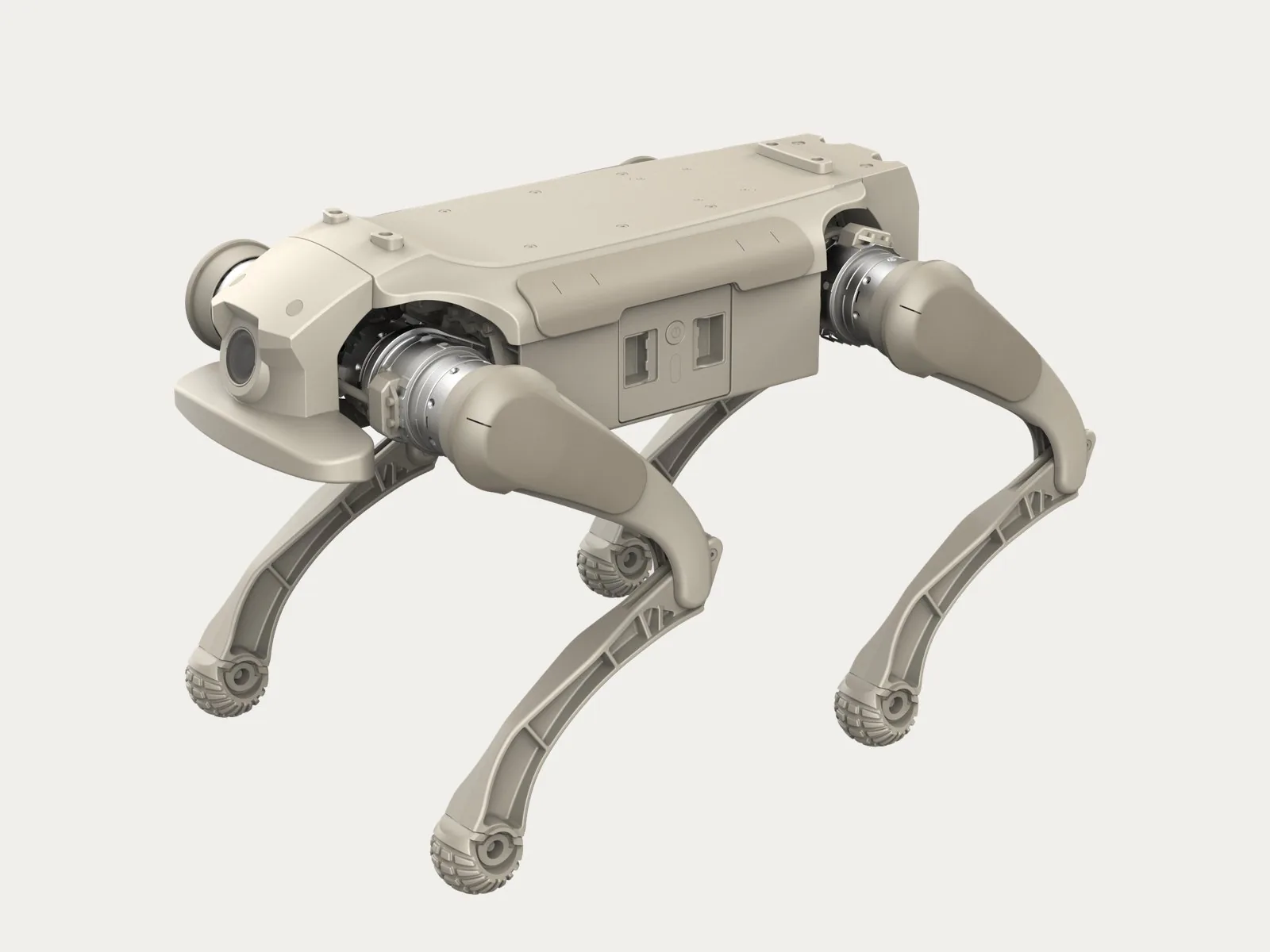
Four-legged robot, product view from the front at an angle

Legged robot

On four legs, the robot moves safely even where wheels reach their limits. Many people know this type as a robot dog. In industry and the energy sector it works as an inspection robot. It climbs stairs, steps over thresholds and obstacles and walks across uneven ground. Equipped with cameras and measuring instruments, it takes over inspection rounds in places that are arduous or dangerous for people.

What it can do

  • Climbs stairs and clears obstacles
  • Sure-footed on scree, mud, snow and ice
  • Modular sensor pack to suit the task
  • Charges itself at its station
Benefit
Inspection rounds in dangerous or hard-to-reach areas, without putting people at risk.
Deployment
On almost any surface, outdoors and indoors.

What ground robots can do today

The right sensors for every task

  • Zoom and wide-angle camerasDetailed visual inspection, from the clamp on an overhead line to the pressure gauge on a pump.
  • Thermal imaging and night visionShows hotspots, fires and people, even in the dark, and provides thermography of solar modules and equipment.
  • LiDARCaptures terrain and structures as a point cloud, the basis for 3D models and surveying.
  • Multispectral cameraShows the condition of plants and land, for example in agriculture.
  • Gas detectionDetects escaping gases and measures their concentration.
  • RTK positioningFixes the position to within centimetres, so routes can be repeated exactly and maps stay aligned.
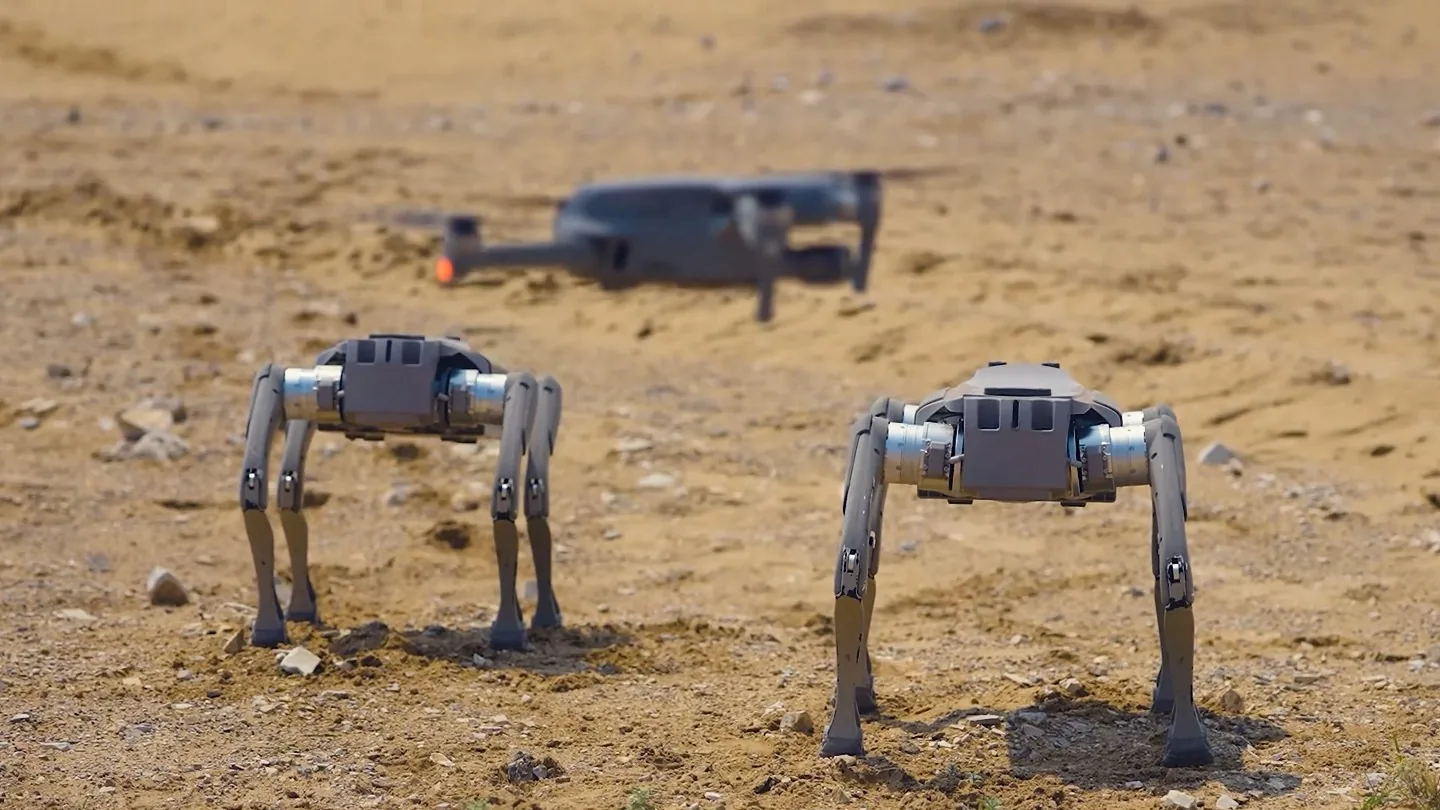
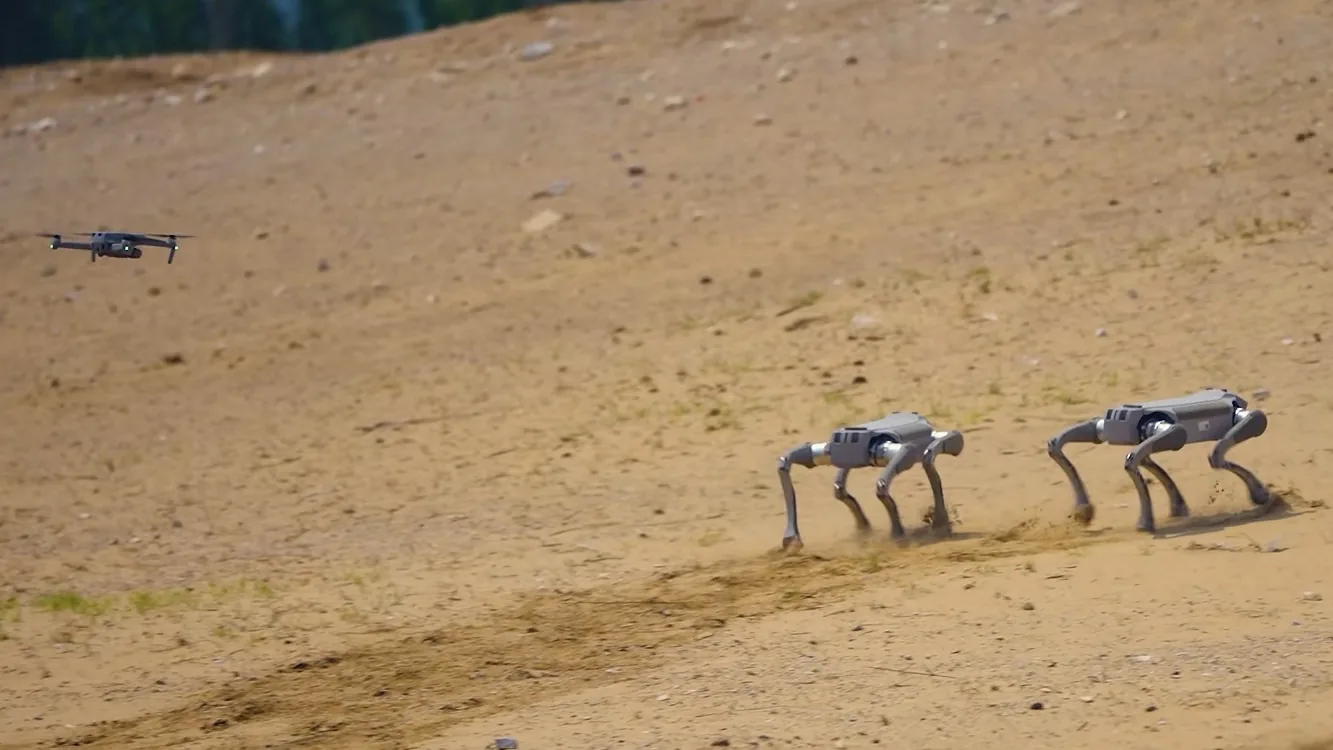
Two legged robots and a drone on a joint mission in open terrain

Air and ground in one mission

Drones and ground robots work together as a team. The drone provides the overview from the air while the robots inspect at close range on the ground. In CyberXHub you plan all systems together and see their live feeds in a single view.

  • Overview and detail at onceThe drone sees the whole site while the robot checks the detail on the spot.
  • Faster responseWhen the drone reports an anomaly, the nearest robot heads straight there.
  • Large areas coveredSeveral systems work in parallel rather than one after another.
  • One operator, one interfaceAll systems come together in CyberXHub instead of running in separate programs.

Frequently asked questions

How long can a robot operate?

On one battery charge, a robot runs for one to several hours, depending on its type and payload. Between missions it recharges at its station on its own, which makes round-the-clock operation possible.

Do the robots also work in rain, snow and darkness?

The robots are built for outdoor use and also operate at night. Before the project starts, we establish where the limits lie on your site, for example in heavy snowfall or dense fog.

Who teaches the robot its way around our site?

We do. We map the site, agree routes and rules with you and connect the robot to your control room. We hand everything over to you fully documented.

Is any data sent to the robot's manufacturer?

That is not necessary. The robots can be operated through CyberXHub without the manufacturer's cloud, and we only install firmware updates once you have approved them.

Can drones and ground robots be used together?

Yes. In CyberXHub, one operator controls drones and ground robots through a single interface, in the same mission.

What authorisation do you need to operate a drone with a dock?

Automated flights with no pilot on site require an operational authorisation from the competent aviation authority, depending on the operator's seat the German Federal Aviation Office (LBA) or the state aviation authority. As the holder of an LUC, Solectric GmbH knows the authorisation process first-hand and guides you through your application. We also support you with the drone licence.

We find the right solution for your task

Tell us about your task and the environment. We propose the right system and, if in doubt, test it on site before you invest.

For systems in continuous operation we offer maintenance contracts with agreed response times.

Send an enquiry